

Tech Debt Doesn't Show Up on the Marketing Budget. Until It Does.
Most CMOs already feel it: slower execution, tighter resources, less room to be agile. The reasons are rarely discussed openly, and often not attributed to the technology decisions being made.
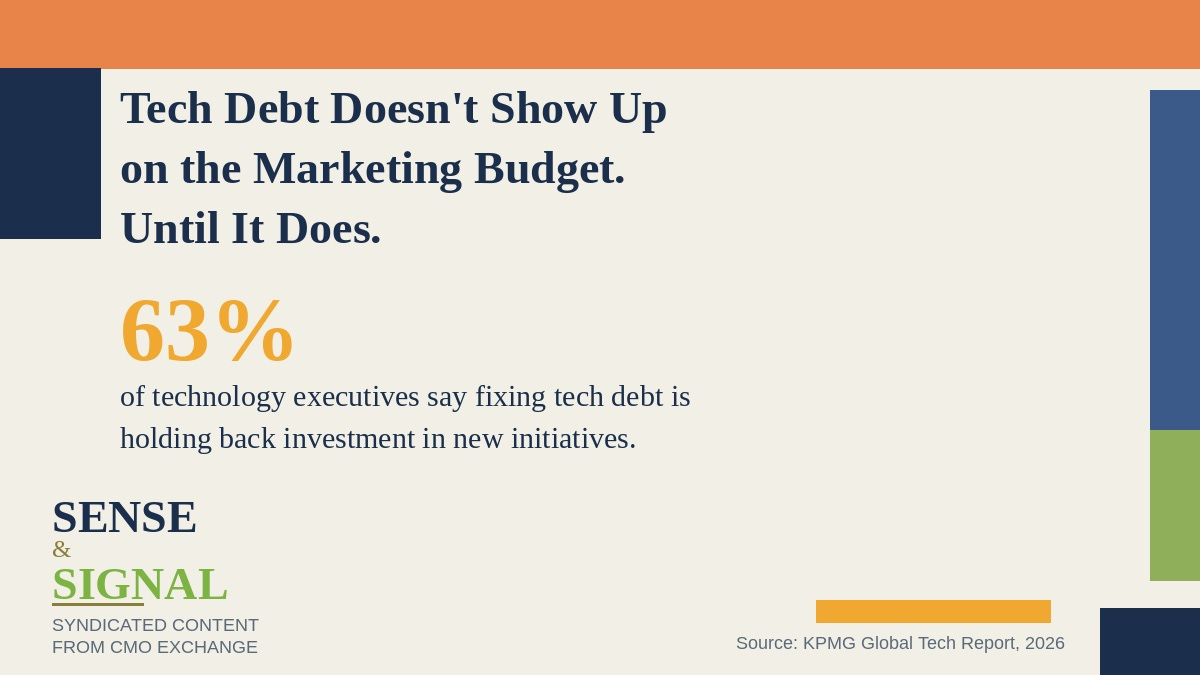
According to KPMG’s 2026 Global Tech Report, surveying technology executives across 27 countries, 63% say the cost of fixing tech debt is actively holding back investment in new initiatives. That’s not a technology problem sitting neatly inside the IT department. It’s a growth problem with direct consequences for marketing’s ability to execute.
When organizations are forced to pay down tech debt, marketing and growth investment are one place having to absorb the impact, often even when formal strategic debate about what that means for the business has occurred.
The CMOs who navigate these challenges well aren’t waiting for the final allocation. They’ve already built a working relationship with the CIO and CTO, and understand the tech roadmap well enough anticipate constraints before they land, and participate meaningfully in the tradeoffs the business is making.
All part of the shift in the CMO role: The line between marketing and tech leader is blurring in ways that aren’t always acknowledged. Understanding the tech roadmap and risk of tech debt on marketing strategy isn’t optional to deliver to strategy and build sustainable growth. It’s increasingly the job.
Strong collaboration in the tradeoffs shaping what’s possible alongside the CIO and CTO better positions marketing to build strategies that continue to drive growth. That starts with being in the room when those tradeoffs are being made.